Helpful instructions for a smoother parcel delivery
Good delivery instructions help your courier find your property, understand your preferences and deliver your parcel as smoothly as possible.
Whether you’re at work, have a parcel box, live in a flat, share your property with others or have restricted access, a few clear details can make all the difference.
This guide provides practical advice and ready-to-use examples to help you write effective delivery notes for your Evri deliveries.
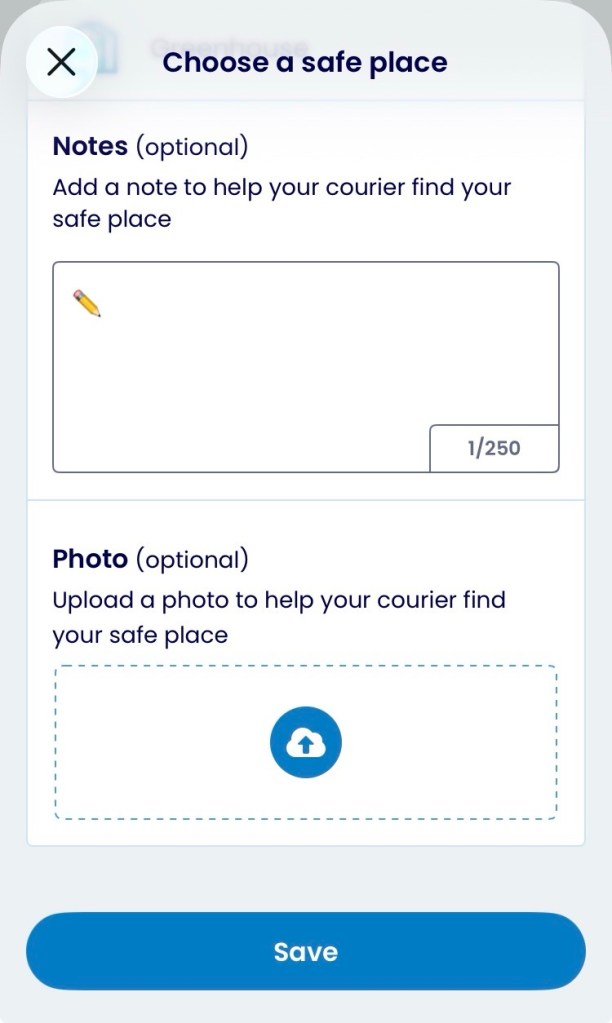
1. What Makes a Good Delivery Note?
The best delivery notes are clear, specific and easy to follow.
Your courier may be unfamiliar with your property, so avoid vague instructions and explain exactly what you mean.
Be specific about the location
Instead of:
“Please leave somewhere safe.”
Try:
“Please place the parcel in the lidded storage box beside the back door. Close the lid securely.”
Give clear directions
Instead of:
“Leave around the back.”
Try:
“Please use the side path beside the garage. The storage box is next to the back door.”
Explain access arrangements
If your property has a gate, locked parcel box or combination padlock, explain where it is and provide the necessary access information.
Provide an alternative where possible
If your preferred parcel box may be full or inaccessible, explain what your courier should do instead.
Keep it short
The Evri delivery notes field has a character limit. Use short sentences, remove unnecessary details and focus on what your courier needs to know.
A good delivery note answers three questions: Where should the parcel go? How does the courier get there? What should happen if that location cannot be used?
2. Work, School Runs and Availability
If you’re often out, work shifts or cannot always answer the door, your delivery notes can explain your preferred arrangement.
- “I work shifts and may be asleep during the day. Please use the parcel box beside the front door.”
- “I’m usually out during school runs. Please use the lidded storage box beside the back door.”
- “I may not be able to answer immediately. Please allow extra time before leaving.”
- “I work nights, so please avoid knocking loudly if an appropriate delivery location is available.”
- “If I’m unavailable, please use the parcel box beside the front door.”
- “Please leave the parcel inside the porch if accessible and suitable.”
Tip: If you have a suitable parcel box or storage box, identify its exact location rather than simply asking for the parcel to be left somewhere safe.
3. Doorbells, Knocking and Noise
Let your courier know if your doorbell is broken, difficult to hear or if you have a preference about knocking.
- “The doorbell is broken. Please knock firmly on the front door.”
- “The doorbell is very quiet. Please knock on the door.”
- “Please knock gently rather than ringing the bell.”
- “Please allow extra time for me to reach the door.”
- “Please avoid knocking loudly. Use the parcel box beside the front door if suitable.”
- “Please use the front door, not the door beside the garage.”
4. Neighbours and Alternative Recipients
If you have a neighbour or household member who can accept parcels, make your preference clear.
- “If I’m unavailable, please ask my neighbour at number [X], if they are available and willing to accept the parcel.”
- “Please do not leave parcels with neighbours. Use the parcel box beside the front door.”
- “My neighbour at number [X] has agreed to accept parcels for me.”
- “Please hand the parcel to a household member if someone is available.”
- “If my neighbour is unavailable, please follow my other delivery preferences.”
- “Please do not leave my parcel with other occupants of the shared house.”
Only include arrangements that have been agreed and are appropriate for your delivery.
5. Helping Your Courier Find Your Property
Some properties can be difficult to locate, particularly on new estates, shared driveways or roads with similar-looking houses.
Clear directions can save time and reduce confusion.
- “My house is the third property on the shared driveway.”
- “Please use the rear entrance, not the front door.”
- “My property is at the end of the unmade track.”
- “Look for the blue front door beside the garage.”
- “My house is on the new estate, opposite the green space.”
- “Please use the door facing the road, not the one facing the garden.”
- “Follow the driveway to the small house at the back.”
- “The entrance is the door marked with my flat or house number.”
Tip: Identify a recognisable feature or give a simple direction that helps your courier find the correct entrance.
6. Gates, Driveways and Access Restrictions
If your property has gates, a shared driveway or a particular access route, explain how your courier should approach it.
- “Please use the pedestrian gate on the left of the driveway.”
- “The gate opens inwards. Please leave room for it to open.”
- “Please close the garden gate securely after delivery.”
- “The driveway is shared. Please keep the entrance clear.”
- “Please use the side path; the main driveway is often blocked.”
- “The electronic gate may take a few seconds to open.”
- “Please use the pedestrian entrance beside the main gate.”
- “Please follow the driveway to the house at the rear.”
If a gate requires a code, include the correct code in your delivery instructions where necessary.
7. Pets and Privacy
If you have pets or prefer parcels to be placed out of view, explain the arrangement clearly.
- “Please close the garden gate securely as we have a dog.”
- “Please do not enter the garden if the dog is outside.”
- “Please knock and wait rather than entering the property.”
- “Please place the parcel behind the porch wall, out of view from the road.”
- “Please use the storage box inside the front garden.”
- “Please do not leave parcels on display beside the front door.”
- “Please use the covered area beside the house, away from the road.”
Instructions should always allow for safe, authorised access and should not ask couriers to enter areas where they could be at risk.
8. Flats, Apartments and Shared Buildings
If you live in a flat, apartment or shared building, identify your entrance and any relevant access details.
- “Please use the entrance marked with my flat number.”
- “My flat entrance is at the rear of the building.”
- “Please use the ground-floor entrance marked [number].”
- “The flat is above the shop; please use the residential entrance.”
- “Several flats share this entrance. Please check the flat number before delivering.”
- “Please use the separate entrance on the left for my home.”
- “The annexe has its own door beside the garage.”
- “Please use the door on the right, not the main house entrance.”
Where a building has several entrances, be precise about which one leads to your property.
9. Parcel Boxes and Secure Storage
A parcel box can make deliveries easier when you’re unavailable. Good instructions help your courier find the correct box and understand how to use it.
A. Locked Parcel Boxes
If your parcel box has a combination padlock or another access arrangement, explain where it is and provide the necessary access information.
Example 1: Beside the Front Door
“Please place the parcel in the locked parcel box beside the front door. Use code [XXXX] and secure it after use.”
Example 2: Beside the Back Door
“The locked parcel box is beside the back door. Please use code [XXXX] to access it and secure the box after delivery.”
Example 3: Inside the Front Garden
“Please use the locked parcel box inside the front garden, to the left of the path. Code: [XXXX]. Please secure the box after delivery.”
Example 4: Large Parcel Box
“Large parcels should be placed in the locked storage box beside the shed. Use code [XXXX] and secure the box after delivery.”
Example 5: Beside the Garage
“The parcel box is beside the garage door. Please use code [XXXX] to open it, place the parcel inside and secure the box.”
B. Unlocked Parcel Boxes
If your parcel box does not have a lock, explain where it is and what your courier should do.
Example 1: Beside the Front Door
“Please place the parcel inside the unlocked parcel box beside the front door.”
Example 2: Beside the Back Door
“The unlocked parcel box is beside the back door. Please place the parcel inside and close the lid securely.”
Example 3: Inside the Front Garden
“Please use the unlocked parcel box inside the front garden, to the right of the path.”
Example 4: Beside the Shed
“Please leave the parcel in the unlocked storage box beside the shed. Close the lid securely.”
Example 5: Under a Covered Area
“Please place the parcel inside the unlocked box beneath the covered area beside the house. Close the lid after use.”
C. Lidded Storage Boxes
Some households use an ordinary lidded storage box instead of a purpose-built parcel box.
Make sure your courier knows exactly where it is.
Example 1: By the Back Door
“Please place the parcel inside the lidded storage box beside the back door. Close the lid securely.”
Example 2: Beside the Garage
“The storage box is beside the garage door. Please lift the lid, place the parcel inside and close the lid securely.”
Example 3: By the Shed
“Please use the lidded storage box beside the shed. Place the parcel inside and ensure the lid is closed.”
Example 4: Under the Porch
“Please place the parcel in the lidded storage box beneath the porch. Close the lid to protect it from the weather.”
Example 5: Large and Small Parcels
“Large parcels or multiple deliveries should go in the labelled large storage box by the back door. Smaller parcels can go in the small parcel box beside the front door.”
D. Tips for Using Parcel Boxes
- Identify the exact location of the box.
- Explain whether it is locked or unlocked.
- Include the correct access code where required.
- Specify which box should be used for large or small parcels.
- Ask your courier to close the lid securely.
- Make sure the box is accessible and suitable for the parcels you expect.
- Provide an alternative if the box may be full or inaccessible.
Couriers should not force parcels into boxes that are too small or use storage locations that are unsafe or unsuitable.
10. Building Work, Renovations and Temporary Access Changes
Building work, scaffolding, contractors or renovations can affect the usual delivery route.
If you know access will be different, update your instructions before your next delivery.
Front Entrance Unavailable
“Building work is taking place at the front entrance. Please use the side entrance beside the garage.”
Scaffolding at the Front
“Scaffolding is being installed at the front of the house. Please use the side path to reach the back door.”
Contractors Blocking the Driveway
“Contractors may be working in the driveway. Please use the pedestrian gate on the left.”
Temporary Entrance
“Our usual entrance is temporarily unavailable. Please use the door beside the garage.”
Restricted Access to the Back Door
“The rear path may be blocked by building work. Please use the front porch if accessible.”
Storage Box Temporarily Inaccessible
“The storage box beside the back door may be inaccessible during renovations. Please use the parcel box beside the front door.”
Temporary Obstruction
“There may be materials near the front entrance. Please use the side path only if it is clear and safe.”
Building-Work Tips
- Explain which entrance is unavailable.
- Identify the alternative route.
- Do not direct couriers through hazardous work areas.
- Do not ask couriers to move building materials.
- Provide an alternative parcel location where possible.
- Remove temporary instructions once the work is complete.
Safety comes first. Only suggest routes that can be accessed safely.
11. Accessibility and Mobility
If you need extra time to answer the door or have a preferred access route, a short note can help your courier understand what to do.
- “Please allow extra time for me to reach the door.”
- “The doorbell is not working. Please knock firmly.”
- “Please use the step-free entrance at the side of the property.”
- “Please leave the parcel within easy reach if the chosen location is accessible.”
- “Please use the ramp beside the front steps.”
- “Please do not approach or disturb my assistance animal.”
Only include personal details that are necessary to explain the delivery arrangement.
12. Weather Protection and Seasonal Conditions
If you have a sheltered location, identify it clearly so your parcel can be protected from the weather.
- “Please place the parcel inside the porch to keep it dry.”
- “Use the covered area beside the front door if it is raining.”
- “Please keep the parcel out of direct sunlight.”
- “Please place the parcel on the raised shelf, not on the ground.”
- “The front path can be slippery in icy weather; please take care.”
- “Please ensure the parcel cannot blow away in strong winds.”
- “Please use the lidded storage box beneath the covered porch.”
Where possible, name the exact sheltered location instead of simply asking for the parcel to be kept dry.
13. Shared Houses and Multiple Occupants
If several people live at your address, explain which entrance or delivery arrangement applies to you.
- “Please use the entrance marked with my flat number.”
- “This is a shared house. Please knock at the main front door.”
- “Please use the separate entrance on the left for my home.”
- “Please do not leave my parcel with other occupants.”
- “If I’m unavailable, please use the neighbour named in my delivery preferences.”
- “Please leave the parcel in the storage box beside my own entrance.”
Clear instructions can help prevent parcels being left at the wrong door or with the wrong person.
14. Home Businesses and Shared Business Addresses
If your home shares an address with a business, office or workshop, make sure your courier knows which entrance to use.
- “This address includes a home and a business. Please use the residential entrance.”
- “Please deliver to the side door marked ‘Office’.”
- “The business entrance is separate from the house. Please use the front door.”
- “Please hand the parcel to reception if it is open and authorised to accept deliveries.”
- “Please use the residential entrance outside business hours.”
- “Several businesses share this address. Please check the name on the door.”
Keep opening times and access information accurate.
15. Large, Heavy or Multiple Parcels
If you regularly receive large parcels or multiple deliveries, explain where different parcels should be placed.
- “Please leave all parcels together inside the porch.”
- “Large parcels should go in the storage box by the back door.”
- “Smaller parcels can be placed in the parcel box beside the front door.”
- “The parcel box is too small for large deliveries. Please use the lidded storage box by the shed.”
- “Please keep the parcels together in the storage area beside the garage.”
- “If the parcel is too large for the available box, please follow the alternative instructions.”
Do not ask couriers to lift or move parcels in a way that could cause injury or damage.
16. Privacy and Property Security
If you prefer parcels to be placed out of sight, or if your property has specific security arrangements, explain them clearly.
- “Please place the parcel behind the porch wall, out of view from the road.”
- “Use the storage box inside the private front garden.”
- “Please close the gate after entering and leaving.”
- “Please secure the parcel box after use.”
- “Please scramble the combination padlock numbers after use.”
- “Please do not leave the parcel on display beside the front door.”
- “Please use the covered area beside the house, away from the road.”
Access Codes and Combination Padlocks
If your chosen delivery arrangement requires an access code, provide the correct details in your delivery instructions.
Couriers should:
- Treat access codes as confidential.
- Take care not to expose codes to unauthorised people.
- Use codes only for the intended delivery.
- Scramble combination padlock numbers after use.
- Secure the box, gate or lock as instructed.
These simple steps help protect the recipient’s property and delivery arrangements.
17. Holidays and Extended Absences
If you will be away, consider whether your usual delivery arrangements are still appropriate.
- “I will be away. Please use the parcel box beside the front door if available.”
- “Please use the lidded storage box by the back door.”
- “If my named neighbour is available and authorised to accept the parcel, please ask them.”
- “Please do not leave parcels outside while I am away.”
- “If the specified box is full, please follow the alternative delivery instructions.”
- “Please do not leave the parcel in an exposed location.”
Consider carefully whether a parcel should be left outside if nobody will be home to collect it promptly.
18. Unusual Property Layouts
If your property has a separate annexe, rear entrance, long driveway or multiple front doors, provide precise directions.
- “The flat entrance is at the rear of the building.”
- “Please use the ground-floor entrance marked with my flat number.”
- “The annexe has its own door beside the garage.”
- “Please use the door on the right, not the main house entrance.”
- “Follow the driveway to the small house at the back.”
- “The farm gate is the entrance to the property. Please follow the track to the house.”
- “Please use the entrance beside the detached garage.”
- “My property is behind the main house and has its own front door.”
Be particularly clear where several properties share an address.
19. When Your Usual Arrangement Cannot Be Used
It is helpful to provide an alternative for situations where your preferred location is unavailable.
If the Parcel Box Is Full
“If the parcel box is full, please use the lidded storage box beside the back door.”
If the Access Code Does Not Work
“If the padlock code does not work, please follow the alternative neighbour instructions shared via the app.”
If the Storage Box Is Inaccessible
“If the storage box is inaccessible, please use the specified alternative location.”
If the Neighbour Is Unavailable
“If my neighbour is unavailable, please follow my other delivery preferences.”
If Building Work Blocks the Route
“If building work blocks the usual path, please use the side entrance if it is clear and safe.”
If the Parcel Will Not Fit
“If the parcel will not fit in the box, please do not force it inside.”
If No Suitable Location Is Available
“If there is no suitable place to leave the parcel, please follow the available delivery options rather than leaving it exposed.”
Only include alternatives that you are happy for your courier to use.
20. Quick-Reference Delivery Notes
Need a short instruction? Start with one of these examples and adapt it to your property.
Parcel box beside the front door
“Please place the parcel in the parcel box beside the front door and secure it after use.”
Lidded storage box by the back door
“Please place the parcel in the lidded storage box beside the back door. Close the lid securely.”
Large and small parcels
“Large parcels go in the labelled storage box by the back door. Smaller parcels go in the small parcel box beside the front door.”
Side entrance
“Please use the side entrance beside the garage, not the front door.”
Broken doorbell
“The doorbell is not working. Please knock firmly on the front door.”
Extra time to answer
“Please allow extra time for me to reach the door.”
Neighbour alternative
“If I’m unavailable, please ask my neighbour at number [X], if they are available and willing to accept the parcel.”
Building work
“Building work is taking place at the front entrance. Please use the side path if it is clear and safe.”
Weather protection
“Please place the parcel inside the porch to protect it from the weather.”
Box full
“If the parcel box is full, please use the lidded storage box beside the back door.”
Access code required
“Please use code [XXXX] to open the parcel box beside the front door. Secure the box and scramble the padlock numbers after use.”
No outside deliveries
“Please do not leave the parcel outside. Follow the other delivery options available if I’m unavailable.”
21. Final Checklist Before Saving Your Notes
Before saving your delivery instructions, check the following:
Is the location clear?
Have you identified the exact door, box, porch, shed or other location?
Are the directions easy to follow?
Could someone unfamiliar with your property understand them?
Is access explained?
Have you included relevant gate, lock or entry details?
Are access codes correct?
If your arrangement requires a code, have you included the correct information in the appropriate delivery notes?
Is there an alternative?
What should happen if the box is full, the entrance is blocked or your preferred location cannot be used?
Is the location suitable?
Would the parcel be protected from the weather and reasonably out of view? Is the route accessible and safe?
Are your instructions up to date?
Remove references to temporary building work or access arrangements once they no longer apply.
Is the note concise?
Keep it short, specific and within the character limit shown in the app.
A FINAL WORD FROM EATON COURIERS
Good delivery instructions make life easier for both recipients and couriers.
A few clear details about your entrance, parcel box, access arrangements or preferred delivery location can save time and help avoid confusion.
If you use a parcel box or lidded storage box, make sure it is easy to identify, accessible and suitable for the parcels you expect.
If you provide a combination code, ensure it is accurate and included in the appropriate delivery instructions. Couriers should keep it confidential, prevent unauthorised access and scramble combination padlock numbers after use.
Above all, be specific about what you would like your courier to do and provide a practical alternative wherever possible.
Clear instructions. Easier deliveries. A better experience for everyone.
Eaton Couriers – helping make your Evri deliveries easier.

